Becoming a Telenovela
Exhibition Therapy (by the Group)
Exhibition as a Punishment
Exhibition Therapy (by the Group)
Exhibition as a Punishment
TELENOVELA
A telenovela is a genre of melodramatic television series whose central themes revolve around interpersonal relationships and the resolution of complex life situations and problems. Most are dramatic, sometimes comedic, unfolding in the present or the past while opening toward the future. Our telenovela is a condensed form of a soup-novel, in which individual episodes (courses) flicker like unspoken assignments and observe us precisely in those layers that mysteriously escape the drama — and yet fundamentally shape it. Why is it so difficult to cook according to a recipe? Who chose the theme that makes me bloated? What does a collective taste like? Why must I carry a role I don’t understand? And how do we ultimately figure out what we actually spent our evening doing?
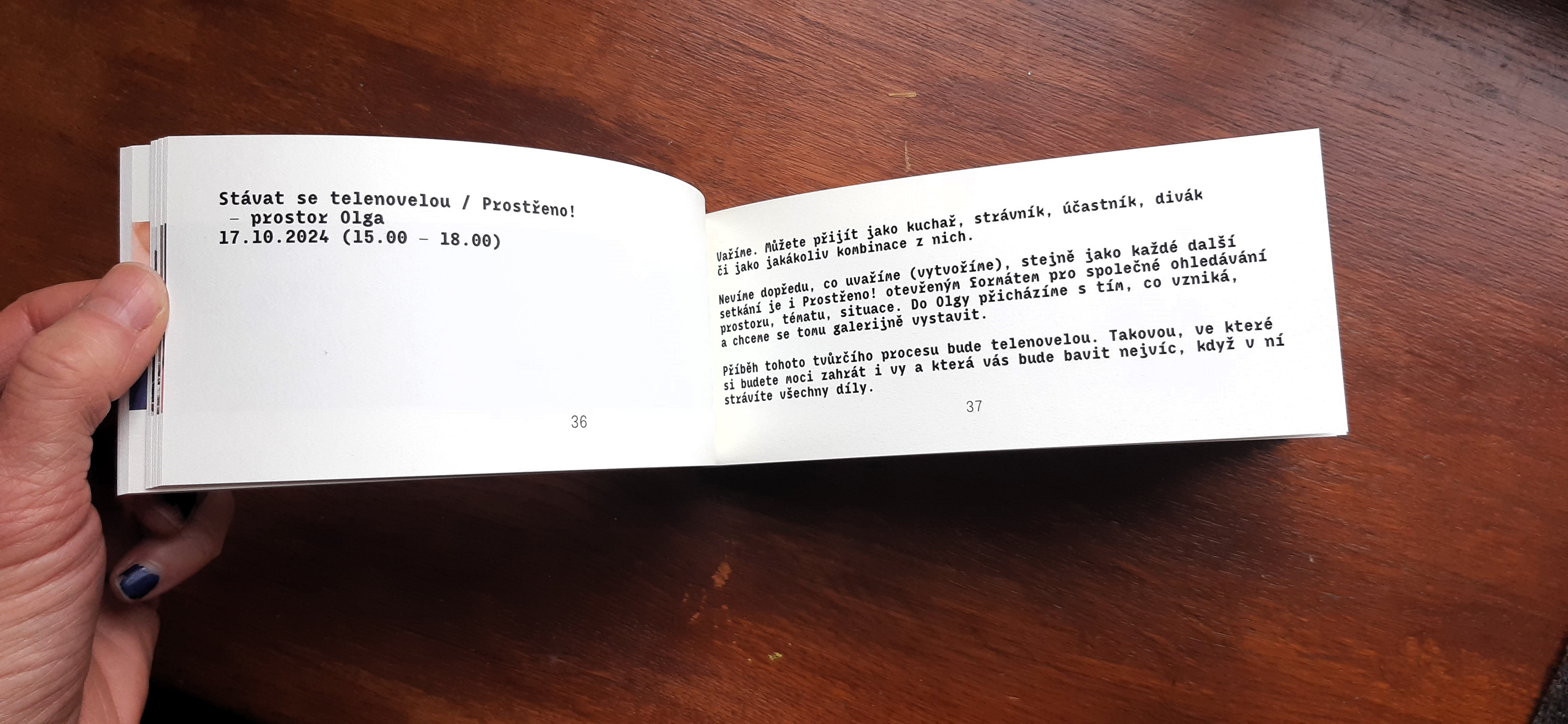
THERAPY
Therapy is another word for treatment. It helps us unpack how it happens that we experience certain difficulties. It allows us to look at our situation from a different perspective. It teaches us to face it and clarify what we need and want. The exhibition appears empty; the group doesn’t know what to do with itself, dislikes exposure and representation, and has no time to please an audience. The purpose of the exhibition is to find its purpose. Help it in that, dear group!
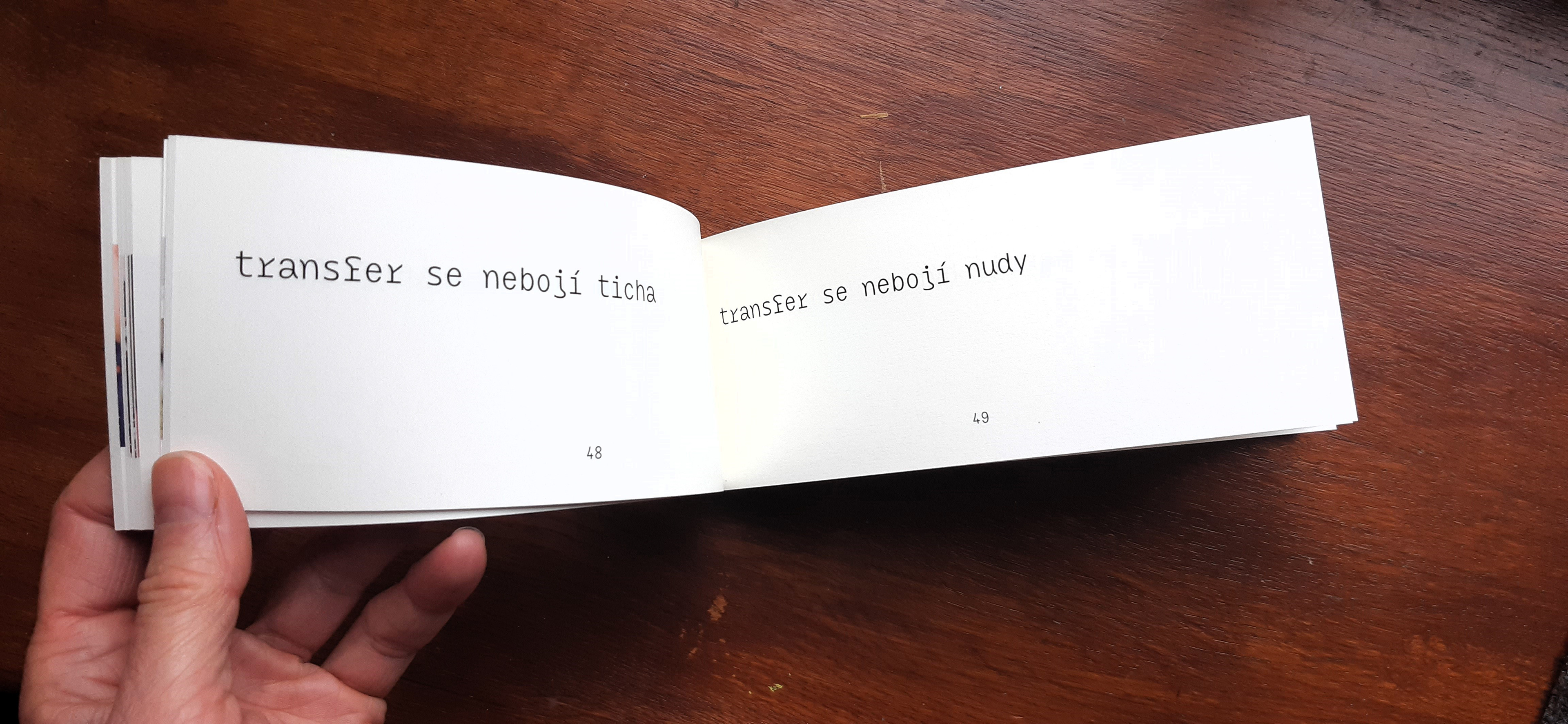
EXHIBITION
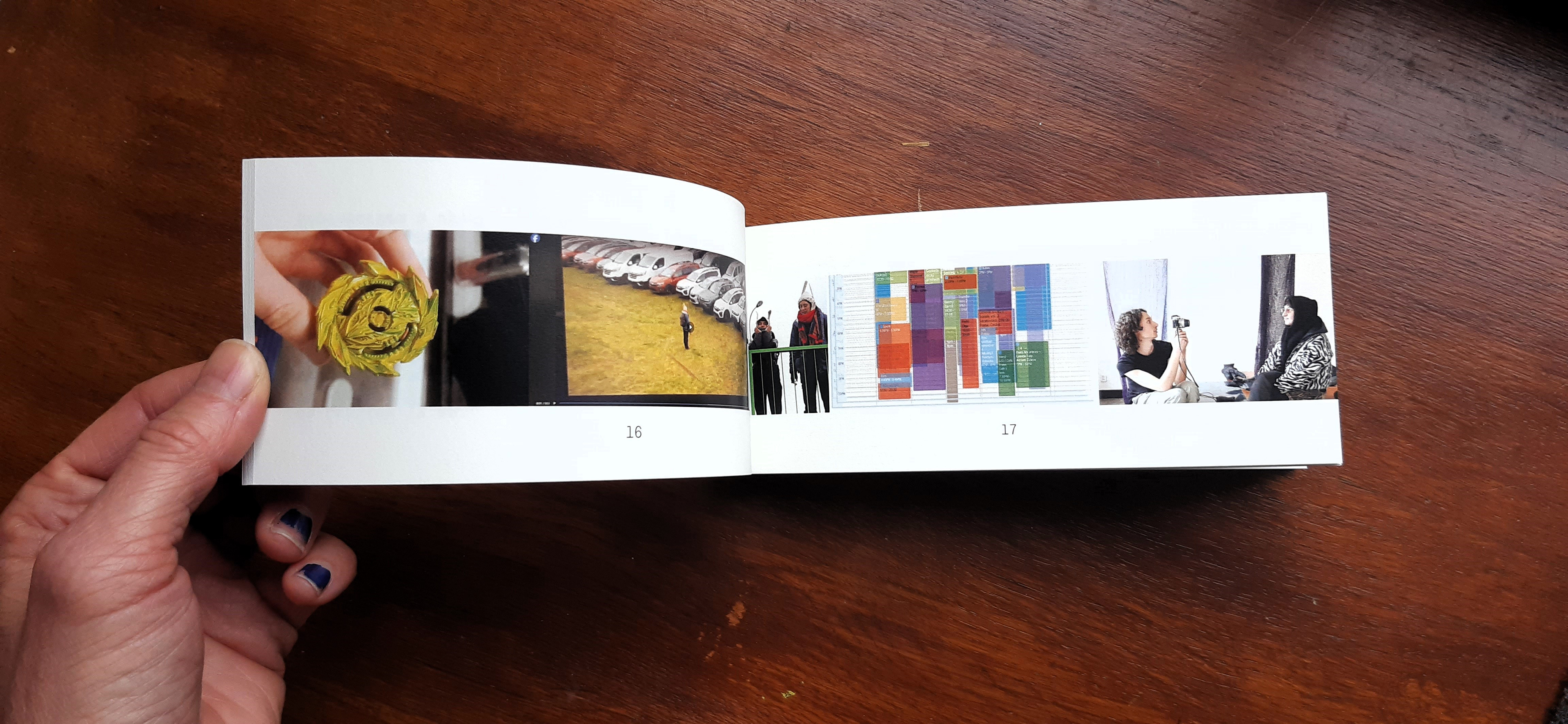
An exhibition is a form of short-term public presentation in which objects (exhibits) are shown to an audience. The exhibition architect decides where and how the works will be displayed. Transfer discovers it has nothing to exhibit. It spends its time meeting in unlikely places and testing its resilience. Rabbit ears mask our individual ambitions; the trip to the glassworks reveals our real competencies; the online constellation exposes our — collective — intentions. That is why we spend three days together non-stop in the gallery, in quiet conspiratorial togetherness. And we become a telenovela, entirely without drama. We do not exhibit objects; we expose ourselves to the risk of losing credibility (as artists, therapists, botanists, educators). The exhibition is an attempt to rehabilitate our dreams of a functional community.
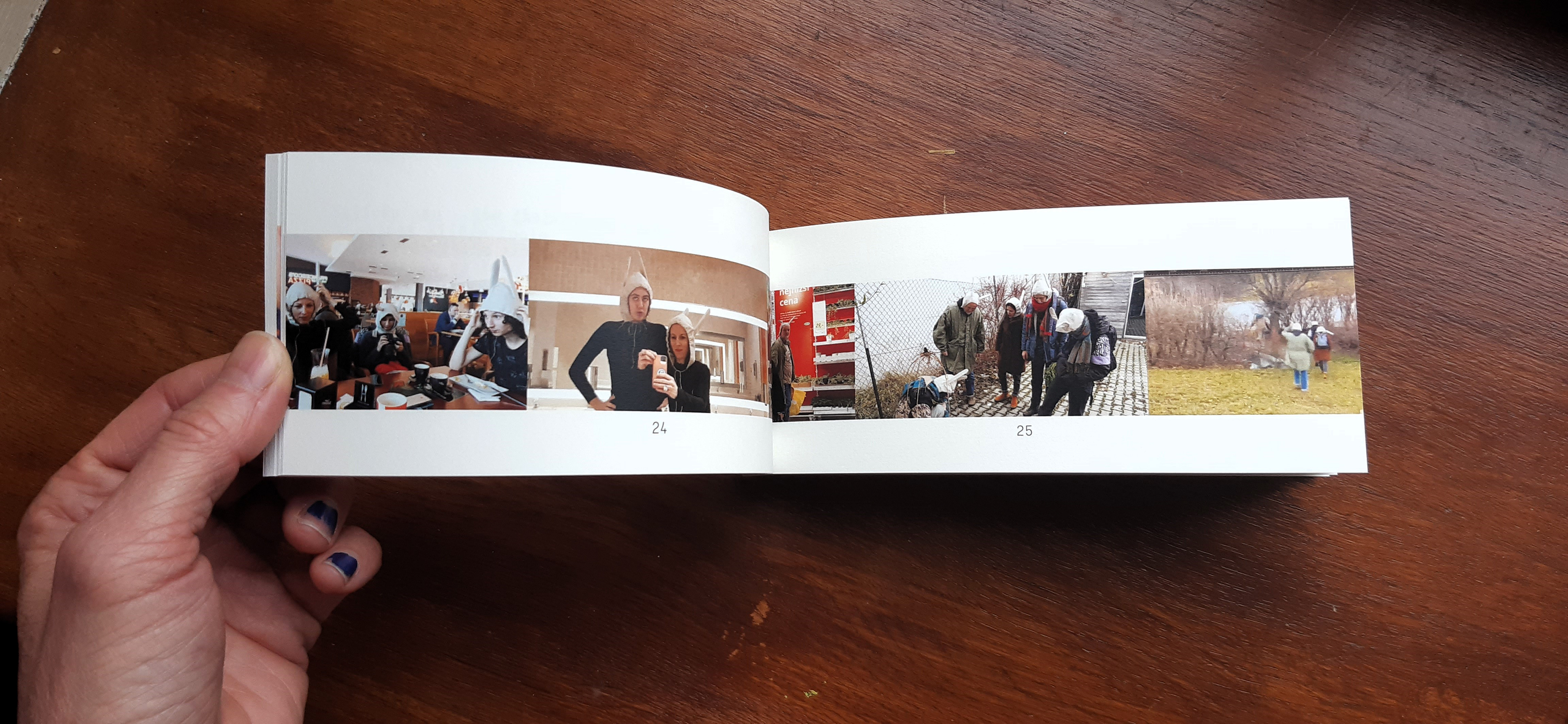
GROUP
A group of people testing their ability to stay close even at a distance (through the principle of transfer). Its members include artists, therapists, parents, students, natural scientists, and educators of various ages and life experiences. Over the last two years, each of them has mostly been elsewhere/in a different mode. Now they are finding their way back to each other and asking a series of questions: Is the group — and its principles — still alive? What must they go through again, what anew, and what must be abandoned for them to meet again — through an exhibition?
PUNISHMENT
A punishment, or sanction, is the imposition of a restriction, harm, loss, or pain by an authorized party to enforce the moral, social, or legal rules of a given community. The purpose of punishment may be correction, deterrence, protection of society, or the restoration of a disrupted order. Through the exhibition, we rehabilitate. We become latently indifferent to the demands of the art world, assert our own perspective on ourselves, and force no one to do anything. We amuse ourselves by occupying a gallery for half a year and stuffing ourselves with shared time — inner and outer. We enjoy our own inability to depict or materialize the reasons why we are (again) here together. We punish ourselves (and you) with a non-depictive exhibition and take a mischievous pleasure in how transfer works.

Five personalities take on the challenge: to prepare an exhibition that leaves a mark. It was meant to be a collaboration, but instead chaos arrived:
Do you really want to call it “Exhibition as Punishment”? Ambition, confusion, and ideas turn the gallery into a battlefield. They decide to wait. Each has a vision, but no one has a plan. I repeat: the greatest intersection happens Thursday at 6:00 pm.
Family, work, motivation, boredom: Sorry for whining here and not being constructive. Who will withstand the pressure, who will break down? Entertain Us! goes 3:1. Honza abstained. – Do you have a better title? – No, I’m still stuck on “punishment.”
Can they put together something shared, something bigger than their own problems, or will their dream turn into a nightmare? Drama, group dynamics, and shards of hope — welcome to a world where every decision hurts. This is Entertain Us!
We are a research-based interdisciplinary collective called Transfer. Among our members are artists, therapists, parents, students, natural scientists, and educators; we are of various ages and at different stages of life. Our central theme is contact, explored through both therapeutic and artistic perspectives. Vulnerability and closeness are regarded as a new survival strategy.
The exhibition conceptually bridges the 2024 cycle Heritage of Collectives: Adaptation and Transformation with 2025’s Dr.umění.
Entertain Us! January 24 – February 28, 2025
Prostor Olga
Nad Primaskou 821/1, Prague 10 – Strašnice
Participants: Hana Chmelíková, Matyáš Grimmich, Jane Scalabroni, Karolína Schoen, Honza Nejedlý and the Transfer Collective
Prostor Olga
Nad Primaskou 821/1, Prague 10 – Strašnice
Participants: Hana Chmelíková, Matyáš Grimmich, Jane Scalabroni, Karolína Schoen, Honza Nejedlý and the Transfer Collective
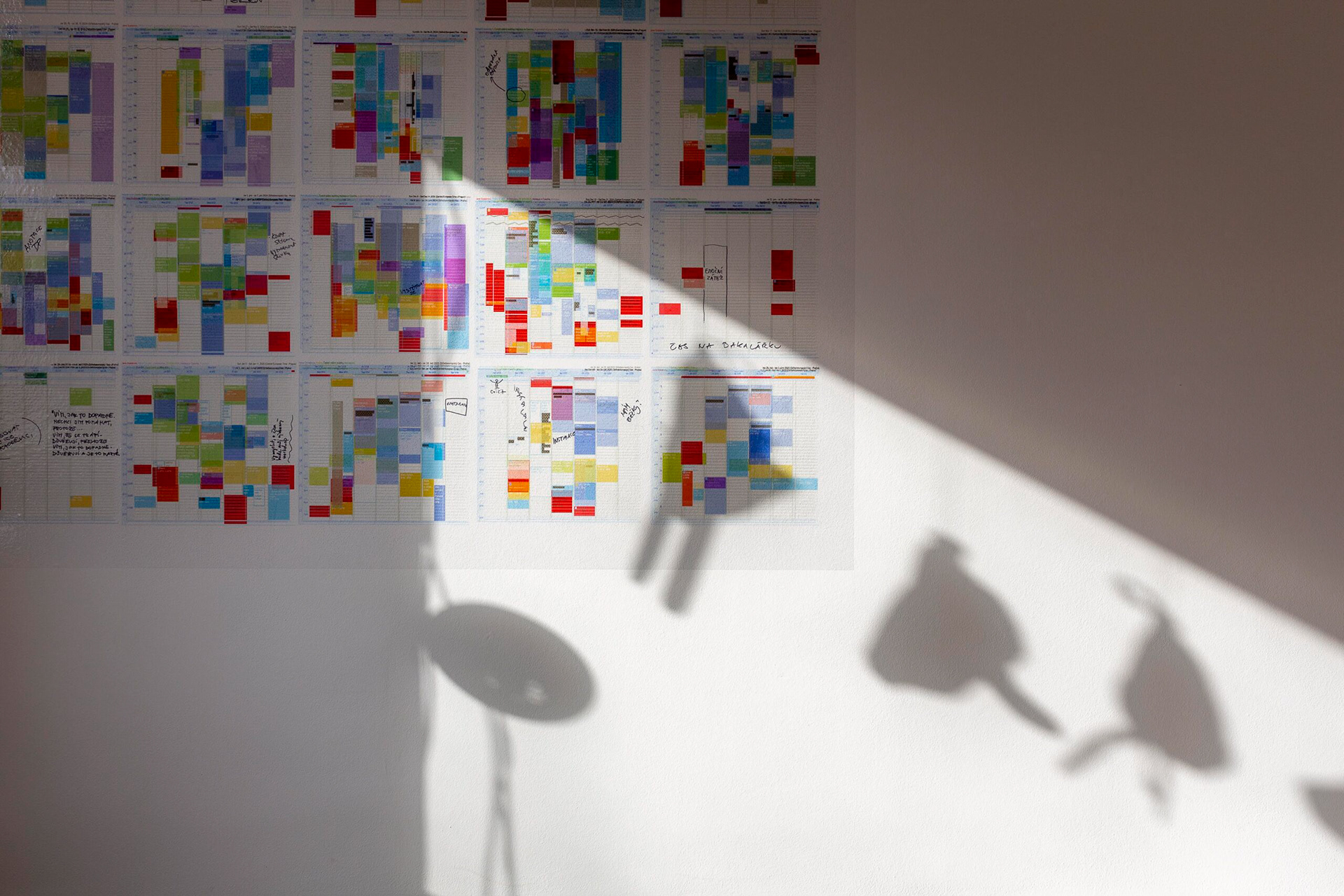
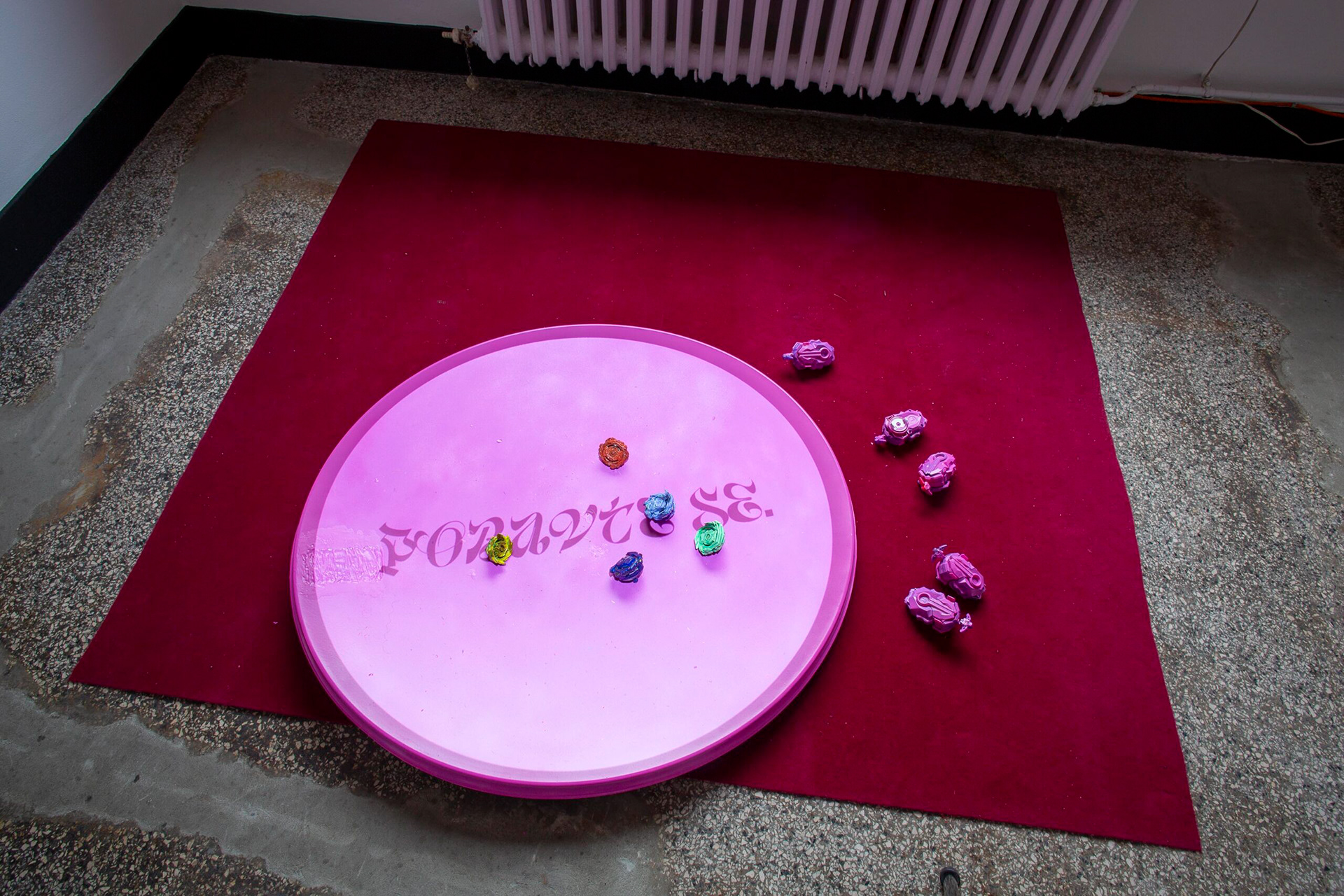
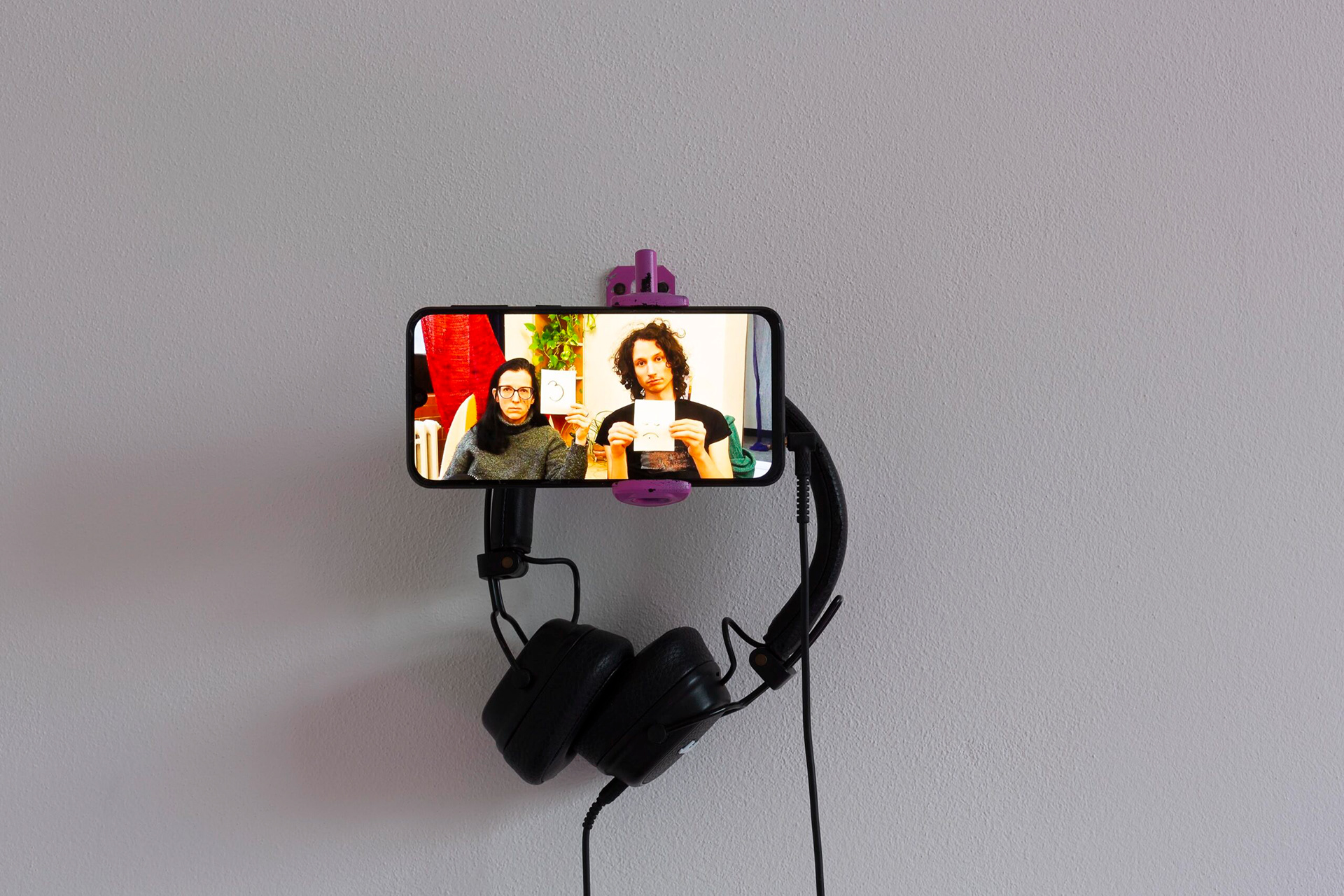
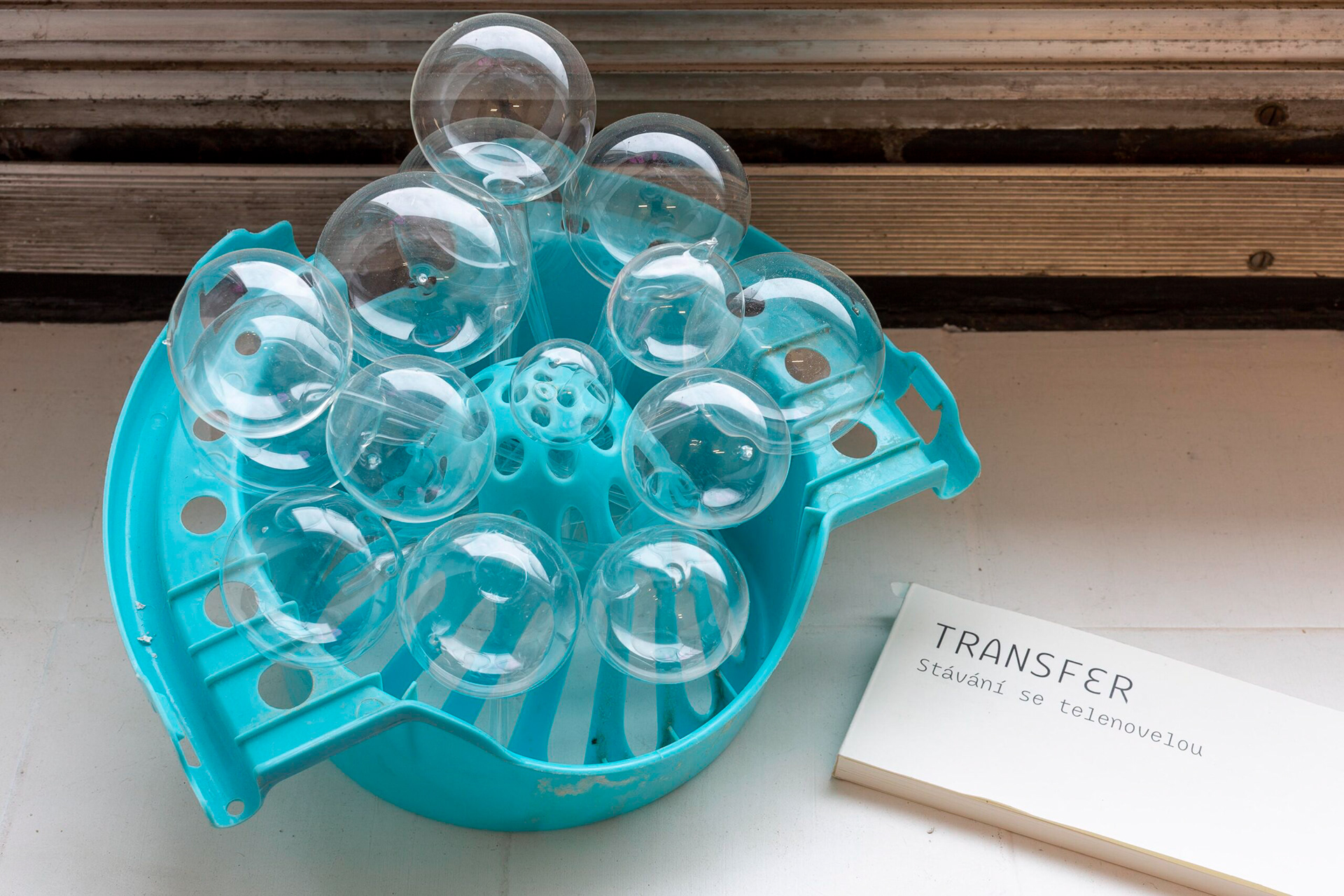
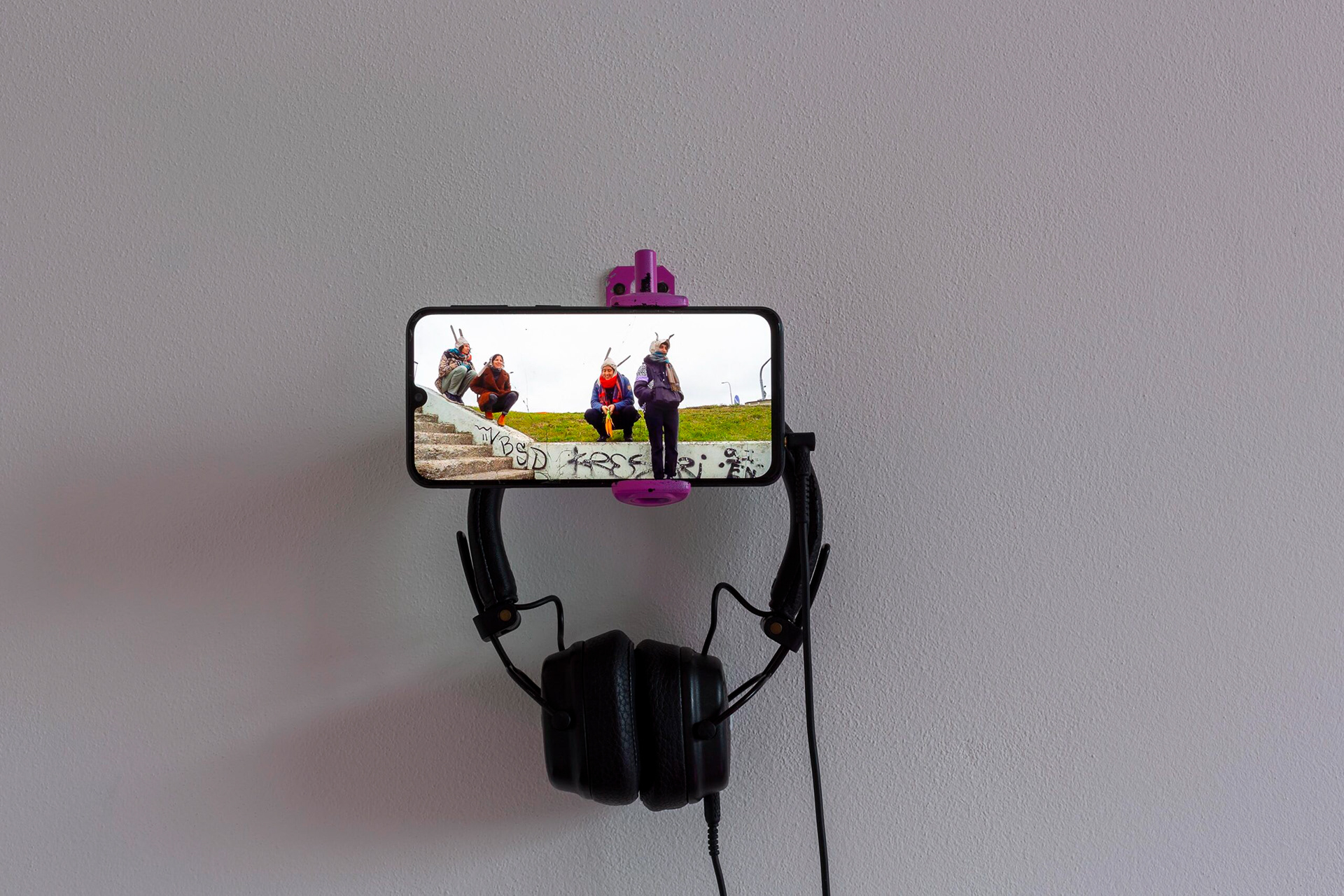
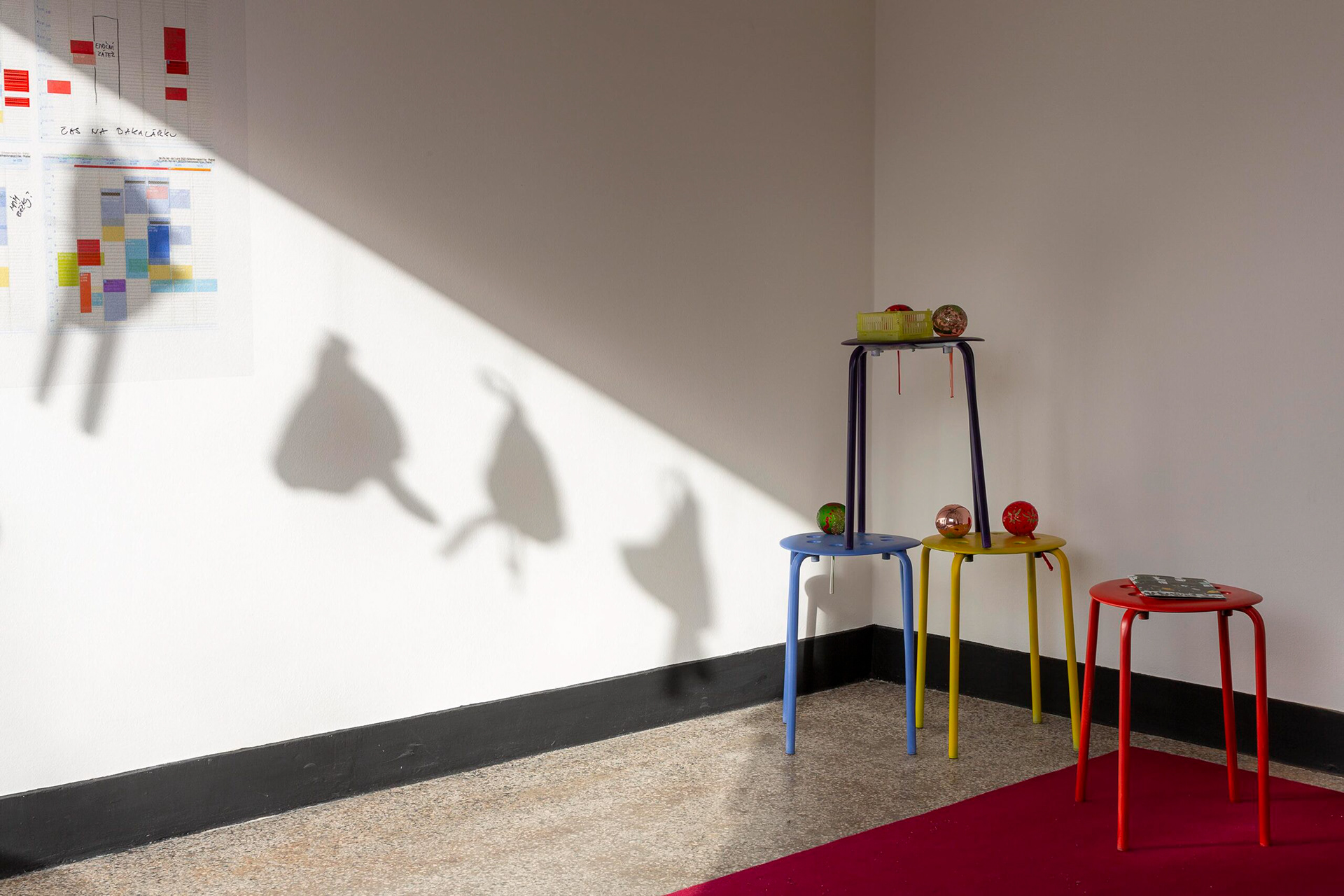
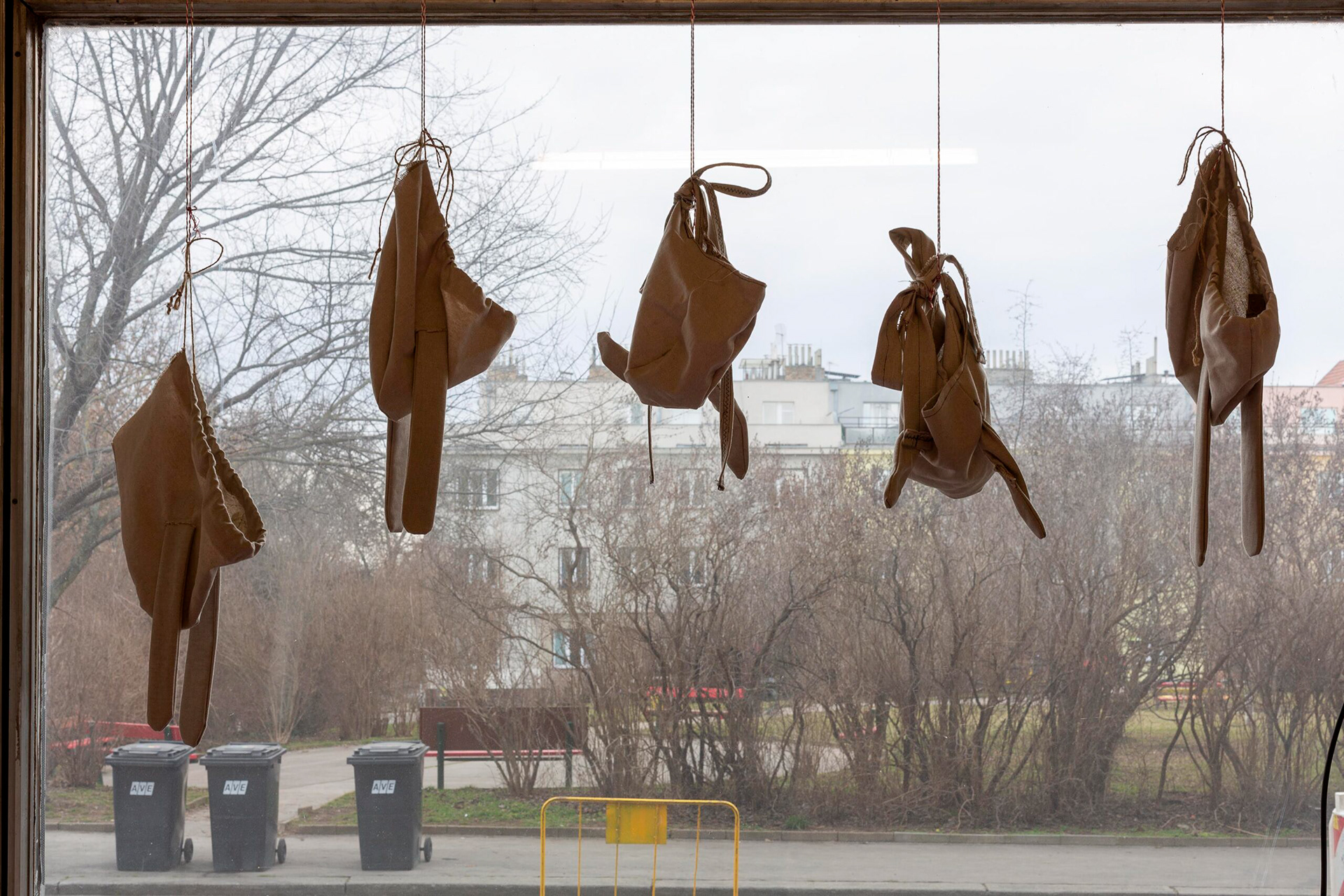
TRANSFER is a long-term experiment situated at the intersection of art, therapy, and community practice. A group of artists, educators, therapists, and other professionals investigates its own functioning through a series of unusual situations in which the exhibition becomes a process rather than an outcome. The collective meets in silence, in fatigue, while cooking, in a glassworks, and during a three-day stay in a gallery, testing what it means to be together — and whether it is still possible. The project works with principles of transfer, constellations, and community building, opening questions of ambition, roles, competence, and the inability to “exhibit something.” The resulting exhibition becomes more like a telenovela: a sequence of episodes revealing the group’s inner dynamics, its dreams of a functional community, and its delight in risk, failure, and ambiguity. TRANSFER does not exhibit objects but a process — relationships and shared time.